A social platform for music. Rate albums, write reviews and discover music through other listeners.
the project
Inspired by Letterboxd, I wanted to bring music reviews and community discussion into one place. I designed and developed DOTWV independently for my third-year university project, from October 2025 to April 2026.
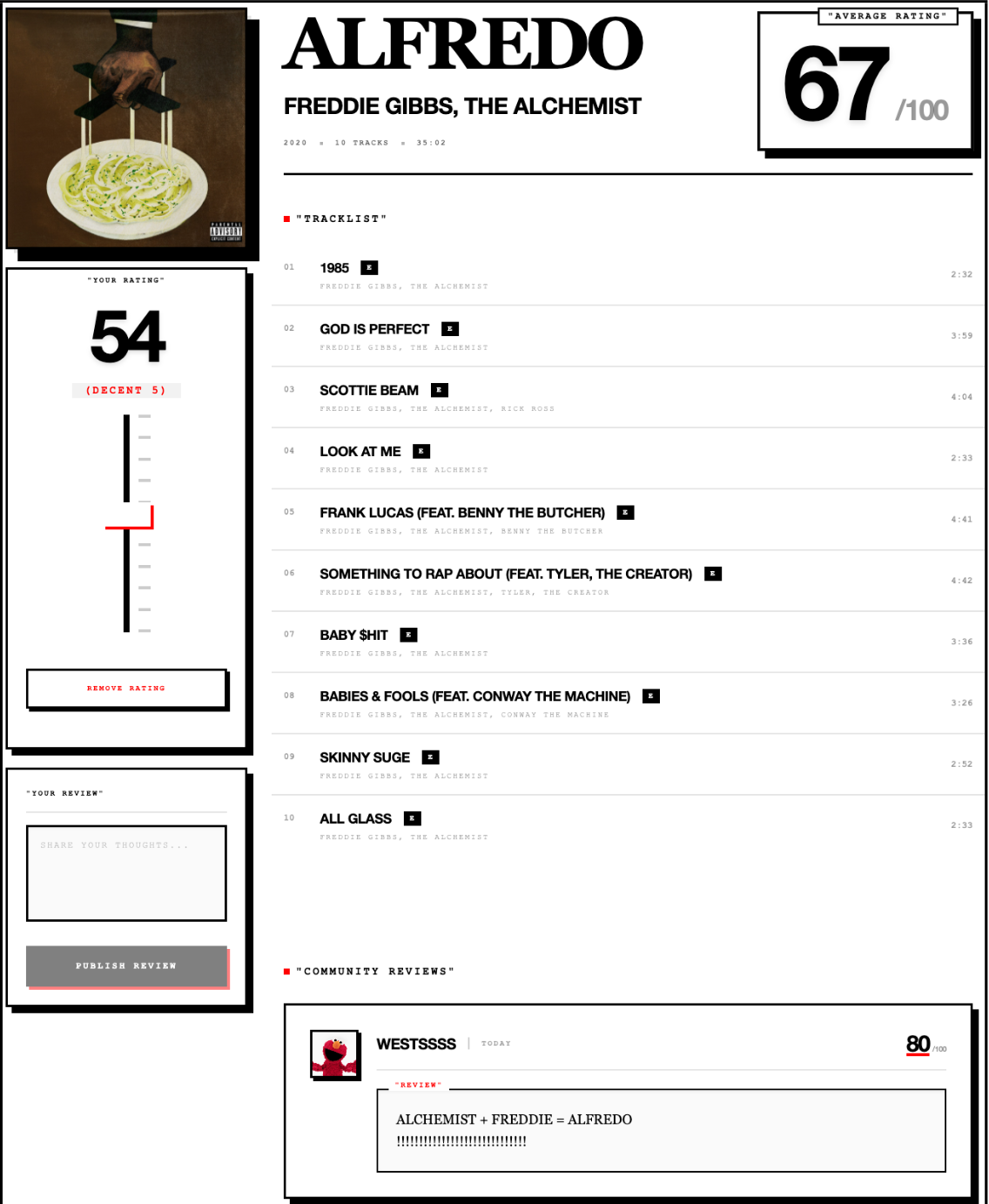
The first version focused on written reviews and a 0–100 album rating system. I expanded it with listener profiles, connection requests and discussion boards for individual artists. Spotify supplies the music catalogue, while DOTWV stores its own reviews, relationships and conversations in PostgreSQL.
preserving threaded discussions
A comment can be part of a conversation that continues without its author. The discussion system lets someone delete their contribution while preserving other people's replies.
Each reply links to a parent comment. If that parent is deleted, its text is replaced with a deleted marker and the replies stay in place. Comments with no replies are removed entirely. The cleanup then follows the parent links upwards, removing deleted placeholders that no longer have replies.
moving album rankings into SQL
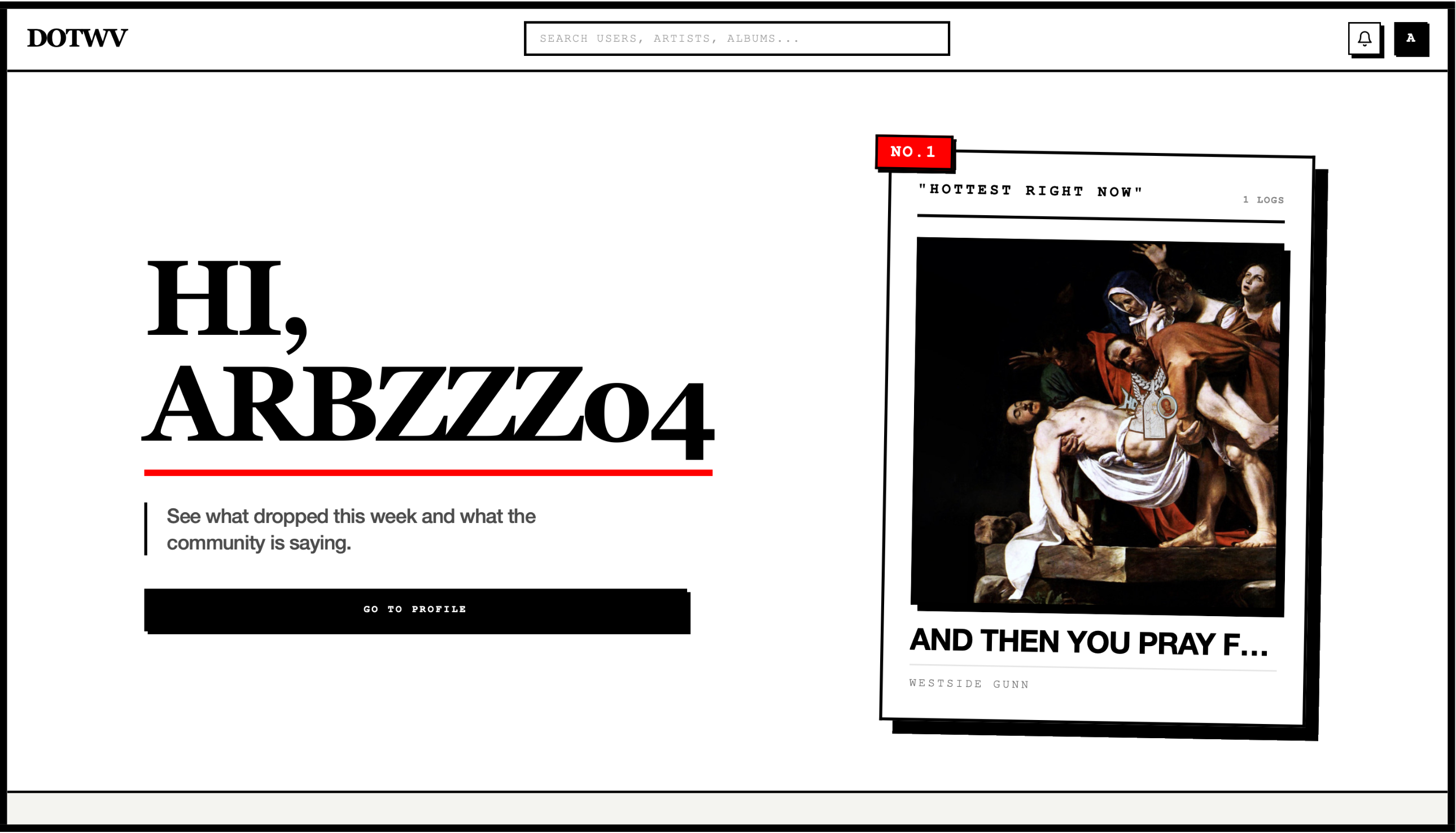
After submission, I returned to DOTWV over the summer to improve the database and application logic. The homepage's popular-albums feature was one example: it fetched matching reviews into Node.js, grouped them by album and sorted the results, only to display five albums.
I moved the calculation into a PostgreSQL function. It excludes private profiles, filters by the selected time period and ranks albums by review count, using average rating to break ties. The application receives at most five rows, rather than the reviews needed to calculate them.
The same round of work added version-controlled schema migrations and unique indexes that prevent a user from voting twice on the same post or comment. Server actions validate inputs with Zod and identify the signed-in user before writing data. Database access policies enforce record ownership.
testing
I used Cypress to test journeys through the application, including signing in, rating albums and using discussion boards. After submission, I added focused Jest tests for actions and components: removing a rating should preserve its written review, and opening a different album should not carry over the previous album's rating.
The action tests use a mocked Supabase client, so they check application logic rather than database permissions. During the university project, I used Postman to attempt unauthorised changes to another user's records. Automating those checks against a test database is the next testing priority.
responding to user feedback
In a small, local evaluation, participants completed tasks without guidance. They understood the rating slider and threaded replies, but the homepage felt empty before they had connected with other listeners.
I added popular albums and recent community reviews to the homepage so new users could start exploring immediately, before building their own network.